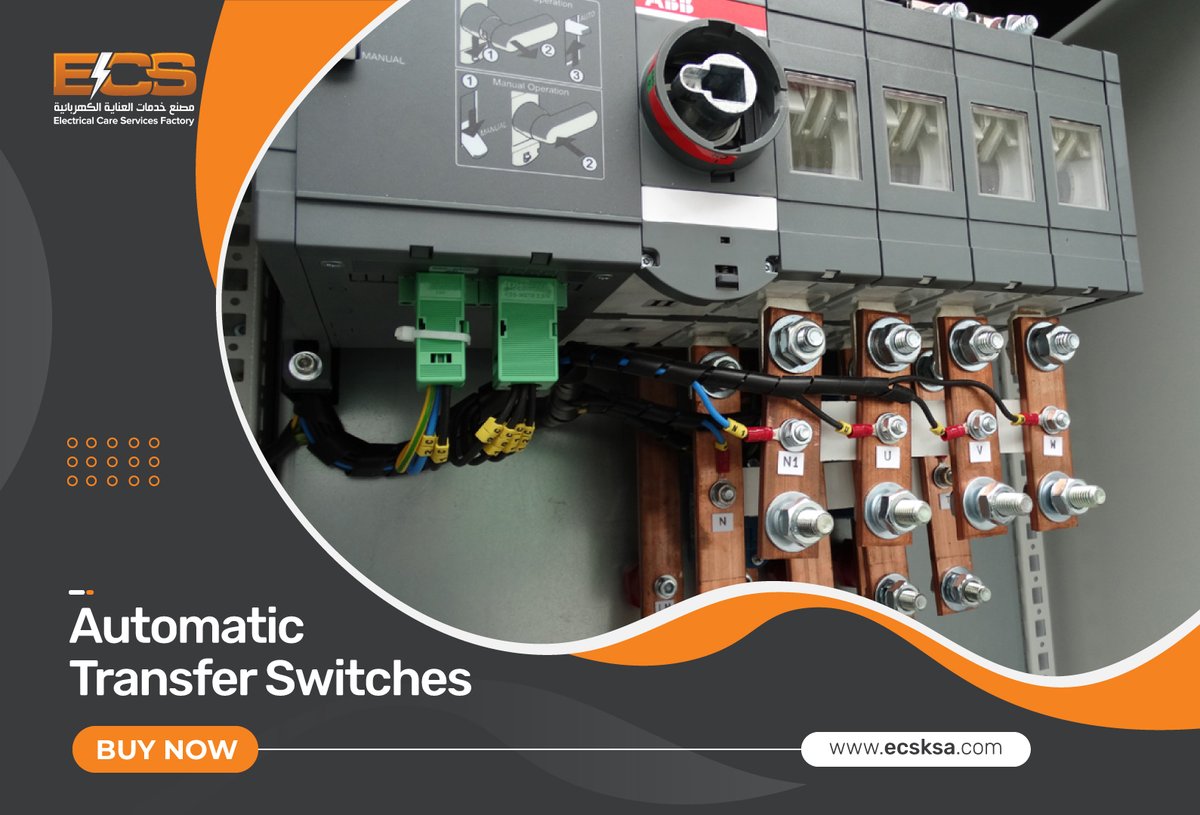
When the lights go out, whether it's a minor flicker or a prolonged blackout, most of us feel a moment of frustration. For a home, it might mean spoiled food or a chilly night. But for critical facilities—think hospitals, data centers, or manufacturing plants—a power outage isn't just an inconvenience; it can be catastrophic. That's where Understanding Automatic Transfer Switches (ATS) becomes not just important, but essential. These unsung heroes of electrical infrastructure stand ready, day and night, to ensure that vital systems remain operational, seamlessly switching between power sources faster than you can blink.
At a Glance: Your Quick Guide to ATS
- What it is: An intelligent device that automatically switches power sources for critical electrical loads.
- Why you need it: Ensures continuous power, protecting essential operations and preventing costly downtime.
- How it works: Monitors primary power (e.g., utility), detects failure, starts backup (e.g., generator), and transfers the load.
- Key purpose: Provides continuous power reliability in hospitals, data centers, factories, and other facilities requiring constant uptime.
- Types of sources: Can manage two or three power sources (utility, generator, or even multiple utilities).
- Transition styles: Transfers can be open (brief interruption) or closed (no interruption).
- Critical features: Time delays, engine control, and robust switching mechanisms.
- Specialized versions: Bypass isolation ATS for maintenance, service entrance ATS for integrated protection.
The Unsung Hero: What Exactly is an Automatic Transfer Switch (ATS)?
Imagine an orchestra conductor, constantly watching the musicians, ready to signal a new section at a moment's notice. An Automatic Transfer Switch (ATS) plays a similar role in your electrical system. It’s a self-acting, intelligent power switching device, governed by microprocessor-based control logic, designed to connect your essential electrical loads to one of two (or even three) power sources.
At its core, an ATS's job is simple yet profound: ensure your vital equipment never loses power. It tirelessly monitors the electrical heartbeat of your primary power source—typically the utility grid—checking its voltage and frequency. The moment it detects a problem, like a dip in voltage or a total blackout, it springs into action, transferring the load to an alternate, stable power source, often an emergency generator or a backup utility feed. This all happens automatically, reliably, and within seconds, minimizing disruption to critical operations.
Beyond the Flickering Lights: Why an ATS Isn't Just a "Nice-to-Have"
For facilities that cannot tolerate even a momentary power loss, an ATS is truly indispensable. Think about a hospital: a power outage could jeopardize patient care, disrupt life-saving equipment, or compromise sterile environments. In a data center, downtime means lost transactions, damaged reputation, and potential data corruption. Factories rely on continuous power to maintain production lines, preventing costly shutdowns and material waste.
Here’s why an ATS moves from a convenience to a critical necessity:
- Uninterrupted Operations: This is the primary driver. An ATS ensures that essential services—from life support systems to critical IT infrastructure—remain operational during utility outages.
- Safety and Compliance: Many industries, particularly healthcare (NFPA 110 standard for emergency and standby power systems), have strict regulations requiring backup power and reliable transfer mechanisms. An ATS helps meet these vital safety and operational codes.
- Protection of Equipment: Stable power prevents voltage fluctuations and sudden shutdowns that can damage sensitive electronics and machinery.
- Peace of Mind: Knowing your critical systems are guarded by an intelligent, automatic defense against power interruptions allows businesses and organizations to focus on their core missions without constant worry about grid instability.
The Seamless Handover: How an ATS Orchestrates Power Transitions
Understanding an ATS is really about grasping the elegant dance it performs between power sources. Most ATS units are designed to default to the primary utility source, only engaging the alternate source when necessary or by explicit command. This isn't just a simple switch flip; it's a carefully choreographed sequence of events managed by its control logic.
Here’s a typical transfer sequence:
- The Watchman's Call: The ATS control logic constantly monitors the normal utility power source. It's looking for stability in voltage and frequency.
- Detecting Trouble: When the normal utility power fails—perhaps a sudden drop, an overload, or a complete blackout—the ATS detects this anomaly.
- Calling in the Backup: Immediately, the ATS sends a signal to your emergency power source, most commonly a generator, telling it to start. This is a crucial function, making the generator automatic transfer switch an integrated system.
- Verifying Stability: The generator cranks up, and as it reaches its operational speed, the ATS continues its monitoring role. It waits for the generator's output to stabilize and ensure its voltage and frequency are within acceptable tolerances. This often involves a short time delay (typically 0 to 6 seconds) to prevent unnecessary switching from momentary "blips" in power and to confirm the backup source is truly ready.
- The Transfer: Once the generator is stable, the ATS automatically transfers the electrical load from the failed utility to the emergency generator. This is where the actual "switching" takes place.
- Normal Service Resumes: When utility power is restored and proven stable again (after another time delay to confirm sustained stability), the ATS signals the generator to cool down and shut off.
- Retransfer: The ATS then transfers the load back to the normal utility source. This retransfer can also be self-acting or manually initiated, depending on the system's configuration and operational preferences.
- Ready for Next Time: The ATS resets, returning to its watchful state, ready for the next power event.
The entire process, from utility failure detection to load transfer, often takes only a matter of seconds, making the interruption barely noticeable to sensitive equipment.
More Than Just On/Off: Diverse ATS Power Source Configurations
The versatility of an ATS extends beyond just "utility-to-generator." Depending on the criticality of the facility and the available resources, ATS setups can manage various combinations of power sources.
The Common Pairings: Two-Source Setups
These are the most frequent configurations, designed to ensure continuous power by leveraging a primary and an alternate source.
- Utility-Generator: This is the quintessential emergency standby setup. The electric utility grid serves as the normal power source, while one or more generators provide emergency power when the utility fails. This is standard for most facilities requiring backup power, from commercial buildings to small data centers.
- Utility-Utility: For facilities demanding extremely high reliability, two independent utility feeds might be used. These could come from separate utility companies or redundant paths from a single utility, ensuring that if one grid connection fails, the other can take over. Think of critical financial institutions or major internet exchanges.
- Generator-Generator: In remote locations where grid power is unavailable or unreliable, two generators can serve as primary and backup. The ATS switches between them, often alternating run times to share the load and allow for maintenance on one unit while the other provides continuous power. This is common for off-grid operations like remote mining sites or telecommunications towers.
Triple Threat: Three-Source Redundancy
For facilities with the absolute highest uptime requirements, ATS systems can be configured to manage three distinct power sources, providing even greater redundancy.
- Utility—Generator—Generator: This arrangement augments a utility feed and a primary standby generator with a second emergency generator connection. This extra layer of backup is crucial for critical facilities during extended outages, severe weather, or when one generator needs maintenance. The third source might even be a portable generator connection point.
- Utility—Utility—Generator: Here, the facility benefits from dual utility redundancy, further backed up by an emergency standby generator. This means you have two independent pathways from the grid, and if both fail, the generator kicks in. The generator can be dedicated to this ATS or shared among multiple transfer switches via a priority control scheme.
Making the Switch: Understanding ATS Transition Types
When an ATS transfers load between sources, how it makes that switch is crucial. The method dictates whether there's a momentary power interruption or seamless continuity.
Open Transition: The Brief Moment of Darkness
This is a "break-before-make" transfer. The ATS disconnects the load from the initial power source before connecting it to the new one. This creates a brief, momentary power interruption—usually 1/10 to 1/3 of a second. While it's a very short blink, it's enough to cause sensitive electronic equipment to drop out or restart.
- Why use it? It's simpler, more economical, and prevents the simultaneous connection of two unsynchronized power sources, which could lead to damaging current surges or even grid instability.
- Variations:
- Open Delayed Transition: The ATS waits for a short, adjustable delay after disconnecting from the first source before connecting to the second. This allows voltage transients to settle.
- Open In-Phase Transition: This type attempts to minimize the interruption by transferring when the two sources are momentarily in phase, reducing electrical shock to the load.
Closed Transition: The Continuous Power Flow
A "make-before-break" transfer, closed transition ATS units temporarily connect both power sources in parallel for a very brief period (typically less than 100 milliseconds) before disconnecting the original source. The result? Absolutely no interruption to the load during the transfer.
- Why use it? Essential for ultra-critical loads like data centers, hospitals, and broadcast stations where even a momentary power dip is unacceptable.
- Considerations: Requires more complex control logic to synchronize the two power sources (matching voltage, frequency, and phase angle) before paralleling them. This added complexity makes them more expensive. Regulations often limit how long a closed transition ATS can parallel two sources to prevent unintended feeding of power back to the grid.
Delayed Transition: Waiting for Stability
Beyond open and closed, "delayed transition" sometimes refers to the ATS waiting for a specified time before switching to the backup source. This allows for any transient power issues to settle, ensuring a more stable and reliable transfer once the backup source is engaged. This delay can also be programmed for retransfer back to utility, allowing the grid to stabilize fully before reconnecting critical loads.
Who's in Control? ATS Modes of Operation
While "automatic" is in the name, ATS units offer flexibility in how they can be operated.
- Manual: In this mode, initiation and operation of the transfer are performed manually by an operator, typically by physically manipulating a switch or handle directly on the ATS unit. This is a very hands-on approach, useful for testing or specific scenarios where human oversight is preferred.
- Non-automatic: This mode still requires manual initiation, often via a push-button or switch, which then triggers an internal electromechanical device to electrically operate the switching mechanism. The initiation can be local at the ATS or remote, offering more convenience than fully manual operation while still requiring human command.
- Automatic: This is the default and most common mode. The ATS controller is entirely self-acting, managing both the initiation and operation of the transfer. It constantly senses the availability and stability of the power sources and initiates transfers or retransfers based on pre-programmed logic, without human intervention. This is the cornerstone of continuous power reliability.
Under the Hood: The Mechanics of ATS Switching
The actual physical act of moving electrical current from one path to another is handled by the ATS's switching mechanism. These mechanisms are engineered for reliability and safety under various load conditions.
- Contactor Type: The most common and often most economical choice, contactor-type switches are essentially electrically controlled, heavy-duty double-throw switches. They are robust and reliable for a wide range of applications, designed to make and break circuits frequently.
- Molded Case Type: These switches utilize components from molded case circuit breakers. They are designed to close and interrupt circuits not only under normal conditions but also under abnormal, high-current conditions (like short circuits). Their simple, compact designs often support both mechanical and motor operators for manual or electrical switching.
- Power Frame Type: For larger, more critical applications demanding high current capabilities (up to 5,000 amps) and extremely fast operation, power frame type ATS units are employed. These are heavy-duty, robust devices, often using two-step stored energy technology for reliable manual and electrical operation even under full load. They provide exceptional durability and withstand capabilities.
Tailoring Power Reliability: Specialized ATS Applications
While the core function remains the same, specific applications often require specialized ATS designs to meet unique electrical or operational needs.
Switched Neutral: Essential for Grounding
In standard electrical systems, the neutral conductor is often directly bonded to ground at the service entrance. However, when connecting to a "separately derived power source" (like a generator that creates its own neutral-to-ground bond), it's crucial to switch the neutral conductor along with the phase conductors. A switched neutral ATS provides a fully-rated fourth pole (for three-phase systems) or third pole (for single-phase systems) to achieve this. This prevents conflicting neutral-to-ground bonds, which can lead to circulating currents, harmonic distortion, and nuisance tripping of ground fault protection, ensuring proper system grounding and safety.
Bypass Isolation ATS: The Ultimate in Uptime Assurance
For truly critical applications—think major hospitals, financial trading floors, or mission-critical data centers—the ability to maintain power even during ATS maintenance or testing is paramount. This is where Bypass Isolation Automatic Transfer Switches come into play.
These systems incorporate dual switching functionality: a primary ATS handles the daily power distribution, while a separate bypass switch acts as a redundant pathway. This allows the main ATS to be completely isolated, inspected, tested, or even removed for service without interrupting power to the critical load. This level of redundancy is often mandated by codes like NFPA 110, ensuring that even the power reliability system itself can be serviced without downtime.
Service Entrance Transfer Switches: First Line of Defense
When a facility has a single utility connection and a single emergency power source, a Service Entrance Transfer Switch is often positioned at the facility's service entrance. This means it's the first major switch the power encounters as it enters the building. Its purpose is to ensure that critical loads quickly and efficiently shift to emergency power during an outage. Often, these switches are configured with intelligent load management capabilities, automatically shedding non-critical loads (like general lighting or HVAC in non-essential areas) to prevent the emergency generator from being overloaded. This maximizes the power available for truly vital systems.
The Fine Print: Withstand Closing Current Rating (WCR) and UL1008
Choosing the right ATS isn't just about functionality; it's also about safety and compliance. A crucial rating to understand is the Withstand Closing Current Rating (WCR). This indicates the maximum fault current an ATS can withstand (close into and carry for a very short duration) without sustaining damage.
The UL1008 standard, which governs transfer switches, permits marking ATS units with short-circuit and/or short-time WCRs that are specific to a particular type of overcurrent protection device (like a circuit breaker or fuse). This means an ATS might have multiple WCRs, each linked to a different upstream protective device. Selecting an ATS with appropriate WCRs is vital for ensuring the integrity and reliability of your entire electrical system, especially under fault conditions. It directly impacts safety by ensuring the ATS won't fail catastrophically when an electrical fault occurs, allowing upstream protection to clear the fault safely.
Selecting Your Sentinel: Key Considerations for Choosing an ATS
Navigating the options for an ATS can seem daunting, but by focusing on a few core considerations, you can pinpoint the best fit for your needs.
- Application Criticality: How important is continuous power? For life-support systems, a closed transition bypass isolation ATS might be non-negotiable. For a small office with non-critical operations, a simpler open transition ATS might suffice.
- Power Source Characteristics: How many sources? What types (utility, generator, multiple utilities)? What are their voltage, frequency, and phase characteristics?
- Load Requirements: What's the total amperage of the critical loads? Single-phase or three-phase? Any particularly sensitive equipment that cannot tolerate even a momentary power dip?
- Transition Type: Is a brief interruption acceptable (open transition) or is absolutely seamless power required (closed transition)?
- Bypass Isolation Needs: Does your facility require the ability to maintain power during ATS maintenance? If so, a bypass isolation unit is essential.
- Code Compliance: What local, national (e.g., NFPA 110 for emergency power), and industry-specific codes apply? These often dictate ATS features and installation requirements.
- Environmental Factors: Will the ATS be installed indoors or outdoors? What are the temperature, humidity, and dust conditions it needs to withstand?
- Integration with Existing Systems: How will the ATS communicate with your generator controller, building management system (BMS), or other facility controls?
- Budget vs. Reliability: While cost is always a factor, weigh it carefully against the potential costs of downtime for your specific operation. Investing in a robust ATS often pays dividends in the long run.
- Withstand Closing Current Rating (WCR): Ensure the selected ATS's WCR is compatible with your upstream overcurrent protection devices to maintain system integrity during fault conditions.
Beyond Installation: Maintaining Your ATS for Peak Performance
An ATS is a mechanical and electrical device that, like any critical piece of equipment, requires regular attention to remain reliable. Installing one is just the first step; maintaining it ensures its readiness when you need it most.
- Regular Inspections: Visual checks for loose connections, signs of overheating, dust accumulation, or pest intrusion should be part of a routine maintenance schedule.
- Routine Testing: Periodically simulating a power outage allows you to verify that the ATS correctly detects the failure, signals the generator to start, transfers the load, and retransfers when utility power is restored. NFPA 110 recommends monthly or quarterly testing, depending on the system's criticality.
- Professional Servicing: Engage qualified technicians for annual or bi-annual preventive maintenance. This includes detailed electrical and mechanical checks, calibration of controls, cleaning, lubrication, and testing of all components to ensure optimal performance and longevity.
Neglecting ATS maintenance is akin to having a fire extinguisher but never checking if it works—you'll only discover it's faulty when you desperately need it.
Your ATS Questions Answered: FAQs & Common Misconceptions
Is an ATS the same as a breaker panel?
No, they are distinct. A breaker panel (or electrical panel) distributes electricity throughout a building and houses circuit breakers for overcurrent protection. An ATS, on the other hand, switches the entire electrical load between different power sources, ensuring a continuous supply to that breaker panel or specific critical circuits.
How long does an ATS transfer take?
For most automatic transfer switches, the transfer process itself (from sensing an outage to connecting to the backup source) typically takes 5 to 10 seconds. This includes generator start-up time and stability checks. The actual "break" time for an open transition ATS is usually less than a second.
Can I install an ATS myself?
Unless you are a licensed electrician with experience in such systems, absolutely not. ATS installation involves high voltage electricity, complex wiring, and adherence to stringent electrical codes (like the National Electrical Code - NEC) and safety standards. Improper installation can be extremely dangerous and can void equipment warranties. Always use qualified, certified professionals.
What's the lifespan of an ATS?
With proper installation and regular maintenance, an ATS can reliably serve for 20 to 30 years or even longer. Factors like the number of transfers, environmental conditions, and the quality of the unit itself will influence its longevity.
Empowering Your Operations: Securing Uninterrupted Power
In a world increasingly dependent on continuous power, an Automatic Transfer Switch isn't merely a piece of electrical equipment; it's a strategic investment in reliability, safety, and business continuity. From safeguarding patient care in hospitals to protecting invaluable data in data centers, the ATS silently stands guard, ready to act the moment utility power falters.
Understanding its various types, configurations, and operational nuances empowers you to make informed decisions for your facility. Don't leave your power continuity to chance. Consult with experienced electrical engineers and certified technicians to design, install, and maintain the right ATS solution for your critical operations. By taking these proactive steps, you're not just buying a switch; you're securing your power future.